Neurodivergent Self-Acceptance: Moving Beyond “Too Much”

Neurodivergent Self-Acceptance: Moving Beyond “Too Much”

Neurodivergent Self-Acceptance

For many adults who are neurodivergent self-acceptance is not something that was built early.

It is something we learn later.

Often after years of:

  • Masking
  • Adapting
  • Questioning ourselves
  • Trying to fit systems that never quite fit us

The shift into self-acceptance can feel unfamiliar.

And sometimes, uncomfortable.

Where “Too Much” Begins

Many adults carry a quiet internal narrative:

“I am too much.”
“Too sensitive.”
“I’m too intense.”
“Too emotional.”

These beliefs rarely begin in adulthood. (More about this here.)

They are shaped through repeated experiences of mismatch.

Moments where your natural way of being was misunderstood, corrected, or minimised.

Over time, those external messages become internal ones.

Rebuilding Self-Acceptance

Self-acceptance is not about ignoring challenges.

It is about holding a fuller, more accurate picture of yourself.

Practical ways to begin include:

  • Noticing your internal language without judgement
  • Reframing differences as variations, not deficits
  • Identifying environments that increase or reduce overwhelm
  • Allowing preferences without needing to justify them
  • Recognising strengths alongside challenges

This is not a quick shift.

It is a gradual return to yourself.

Boundaries as Self-Respect

One of the clearest expressions of self-acceptance is boundaries.

Not rigid walls.

But informed choices.

You might begin to:

  • Say no without over-explaining
  • Limit environments that drain you
  • Choose depth over obligation in relationships
  • Step back from constant availability
  • Protect your energy as something valuable

Boundaries are not selfish.

They are supportive.

Regulation Before Reflection

Self-acceptance is much harder when your nervous system is overwhelmed.

This is where regulation practices matter.

You might explore:

  • Rhythmic sound to ground the body
  • Quiet sensory spaces to reduce input
  • Gentle movement to discharge energy
  • Breath patterns that extend the exhale
  • Sound or frequency-based practices that support calm

When the body settles, the mind softens.

From there, reflection becomes safer.

Watch the Videos

Part 1

Part 2 – drops on 16 April 2026
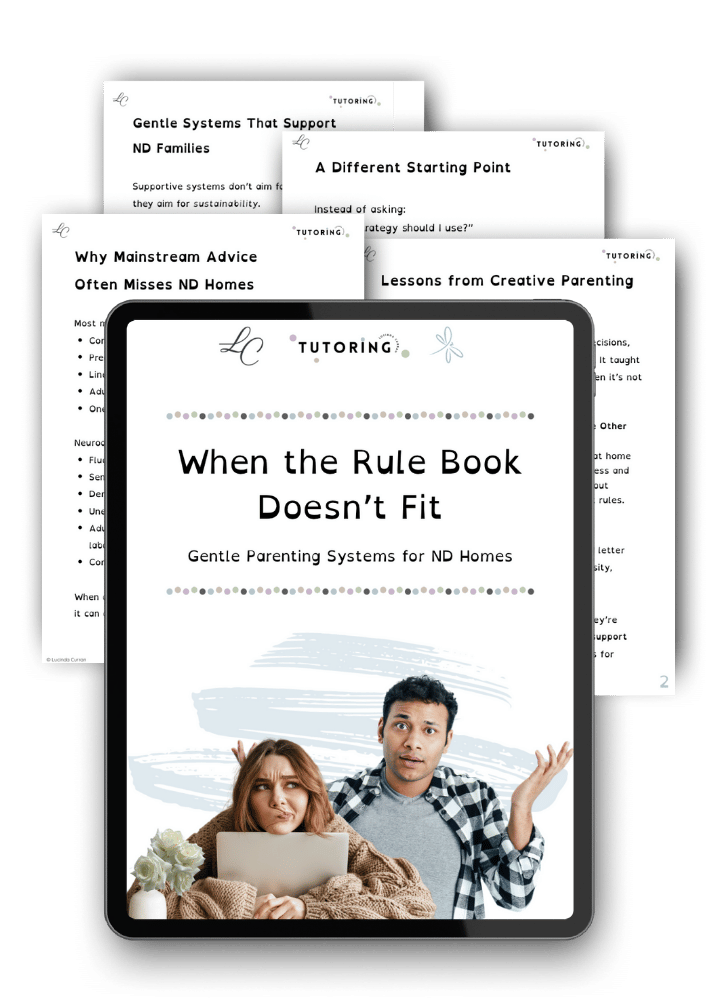
When the Rule Book Doesn’t Fit - Gentle Parenting Systems for ND Homes display

A Broader Invitation

If this resonated, you are not alone.

Many neurodivergent adults reach a point where they realise the systems they’ve been trying to follow were never designed for how they think, feel, or process the world.

Change doesn’t begin with pushing harder.

It begins with understanding yourself differently.

That’s why I created When the Rule Book Doesn’t Fit — a gentle starting point for exploring new, more supportive ways of living and working with your brain.

Get your free copy here

If you find yourself wanting deeper, more embodied support with regulation, energy, and reconnection, you might also explore Radiance Reset.

It’s not about fixing who you are.

It’s about creating space to come back to yourself.

You May Be Interested

If this resonates, you might also explore:

Sensory-Friendly Spaces: Supporting Neurodivergent Wellbeing

Sensory-Friendly Spaces: Supporting Neurodivergent Wellbeing

Sensory-Friendly Spaces: Supporting Neurodivergent Wellbeing

Have you ever walked into a room and felt every light flicker, every chair squeak, and every smell amplified?

For many of us who are neurodivergent, the environment can overwhelm before we even start. 

Sensory-friendly spaces make all the difference for neurodivergent wellbeing — and here’s why.

What a Sensory-Friendly Space Feels Like

A sensory-friendly space feels calm, predictable, and safe. Lighting is soft and adjustable, sounds are filtered or dampened, and the layout allows freedom to move without chaos.

Inside your neurodivergent brain, this feels like breathing after holding your breath for far too long. Your muscles relax, your heart rate slows, and your mind has space to focus.

Why “Sensory-Friendly” Matters

Everyday environments can be overwhelming — from noisy cafeterias to busy streets and crowded classrooms. Repeated sensory overload can lead to exhaustion, shutdown, or meltdown.

By contrast, sensory-friendly spaces support emotional regulation, reduce stress, and allow neurodivergent people to feel safe and grounded.

Creating and Identifying These Special Spaces

You don’t need a full room renovation to create a space that works for you. Small changes go a long way:

  • At home: Quiet corners, soft lighting, weighted blankets, noise-cancelling headphones.

  • At school or work: Predictable routines, low-traffic areas, scheduled sensory breaks.

  • Public spaces: Seek out calm cafes, libraries, or parks; advocate for inclusive design in community areas.

Even tiny adjustments — like switching to softer lighting — can make a huge difference to your comfort.

Benefits Beyond Comfort

When sensory needs are met, neurodivergent people can thrive socially, emotionally, and cognitively.

Creativity flows, concentration improves, and connection with others feels more natural.

This isn’t just about comfort — it’s about creating environments where people can live fully and authentically.

Check Out My Video

I explore the concept of Sensory-Friendly Spaces here in my latest video.

Final Thoughts: Sensory-Friendly Spaces are Essential

Sensory-friendly spaces are not luxuries — they are essential for supporting neurodivergent wellbeing.

Honour your nervous system, notice what environments feel best for you, and give yourself permission to seek or create spaces that work.

Want more strategies for thriving as a neurodivergent person?

Sounds for Autism, Anxiety & Fear

Sounds for Autism, Anxiety & Fear

Sounds for Autism, Anxiety & Fear

How Sound Helps Calm the Nervous System

Ever felt completely overstimulated, like every sound, light, or social interaction is just too much?

Whether it’s anxiety, sensory overload, or shutdowns, there’s one natural tool that can help: sound.

From humming and singing to deep vibrations and music, sound can directly activate the vagus nerve, our body’s built-in relaxation switch.

This means it can help reduce stress, prevent meltdowns, and bring a sense of calm—all in a way that’s backed by science.

Let’s explore how it works and how you can use sound to support your nervous system.

The Vagus Nerve: Your Body’s Relaxation Switch

The vagus nerve runs from your brainstem down through your body, connecting with your heart, lungs, and gut.

It’s a key part of the parasympathetic nervous system, which helps you rest, digest, and recover.

Unlike the fight-or-flight response, which ramps up anxiety and stress, the vagus nerve brings everything back to a state of calm.

💙 It slows the heart rate
🔷 Regulates breathing
💙 Reduces inflammation
🔷 Supports emotional regulation

And the best part? Sound is one of the easiest ways to activate it.

(Read more about the vagus nerve.)

How Sound Stimulates the Vagus Nerve

Research has found that certain sounds and vibrations can directly engage the vagus nerve, helping to regulate emotions and reduce stress.

🎶 1. Humming & Singing

The vibration of your voice stimulates the vagus nerve, sending calming signals through your body. (Check out my #1 Humming Technique here.)

Studies have shown that group singing even increases heart rate variability—a sign of a well-regulated nervous system. (Maybe it’s time to join a choir?)

💧 2. Gargling

Dr Carlo Rinaudo, a chiropractor, explains that gargling is a powerful vagus nerve exercise.

The muscles at the back of the throat engage, stimulating vagal tone—the measure of how well your nervous system regulates stress.

🎵 3. Listening to Music

Certain types of music, particularly those that create a sense of awe or deep relaxation, have been linked to increased vagus nerve activity and lower anxiety levels.

🔔 4. Sound Healing & Vibrational Therapy

Low-frequency sounds, Tibetan bowls, and tuning forks create deep resonance in the body, supporting relaxation and emotional balance.

Research suggests these types of sound therapy can reduce stress and even improve focus.

Why This Matters for Autism, Anxiety & Fear

For many neurodiverse people, sensory overload, anxiety, and emotional overwhelm are part of daily life.

Learning to regulate your nervous system through sound can be a game-changer.

💙 Helps prevent meltdowns & shutdowns

🔷 Reduces stress and sensory overwhelm

💙 Supports emotional regulation & focus

🔷 Provides a simple, natural way to find calm

The beauty of sound is that it’s always available—whether you hum, listen to music, or even gargle!

Try It for Yourself

Now, I’d love to hear from you!

💬 What sounds help you feel calm and regulated? Share your experience in the comments.

🎧 Want to explore sound healing? Join me in a sound journey! LucindaCurran.com

And if you’re looking for a community of unique people who truly get it, come join us at members.LucindaCurran.com—it’s free!

#Autism #AnxietyRelief #VagusNerve #SoundHealing #Neurodiversity #DifferentAndLovingIt #EmbraceYourUniqueness