Creating a Life That Feels Like You

Creating a Life That Feels Like You

Creating a Life That Feels Like You

Creating a life that feels like you does not necessarily involve dramatic change. Sometimes, it begins with noticing the small things that make an ordinary day feel unexpectedly good.

A particular sound might settle you.

The morning light might make you want to linger.

Perhaps there is a favourite mug, a familiar patch of garden, the sound of dogs moving around the house, or a meal that feels like comfort.

None of these things may look significant from the outside.

Yet they can tell us something.

They can show us what feels good, what feels safe, what brings pleasure, and what makes a space feel more like home.

What If Happiness Is Smaller Than We Expect?

We often talk about happiness as though it should be obvious.

A major achievement. A wonderful relationship. A dream finally realised. A life that looks enviable from the outside.

Those things can certainly bring happiness. However, everyday contentment often lives somewhere much quieter.

A patch of sunlight can be enough.

So can a favourite song, an unexpectedly good cup of tea, fresh air through an open window, or the ridiculous delight of watching a dog discover something fascinating in the garden.

These moments may not change our lives.

They can change the texture of a day.

That distinction matters.

Creating a Life That Feels Like You Is Not the Same as Creating a Perfect Life

There is a particular freedom in recognising that a satisfying life does not have to look impressive.

Perhaps the life you once imagined for yourself no longer fits.

Maybe your priorities have changed. Your understanding of yourself may have deepened. What once seemed essential might now feel irrelevant, while something you previously dismissed as unimportant has become precious.

Creating a life that feels like you can therefore involve a process of noticing rather than striving.

What makes your shoulders drop?

Where does your attention naturally linger?

Which activities leave you feeling more settled rather than depleted?

What kind of environment allows you to be yourself without constantly adjusting?

These questions can reveal more than a list of conventional goals ever could.

Sometimes We Recognise Ourselves Through What We Enjoy

Small pleasures can contain surprising amounts of information.

A person might discover that they love wandering through op shops, listening to the same album repeatedly, growing herbs, spending time beside water, cooking for friends, sorting collections, watching clouds or taking photographs of seemingly insignificant things.

None of these interests needs to become a productivity project.

Their value can simply be that they feel good.

For neurodivergent people, this kind of noticing can be particularly meaningful. Years of adapting to expectations can make it difficult to distinguish between what genuinely suits us and what we have learned to tolerate, perform or pursue because it seemed expected.

Pleasure can become a clue.

So can relief.

Even boredom can tell us something.

What Have You Built Without Realising It?

Sometimes a life that feels like you has already begun to emerge.

Look around your home.

Notice the objects you have chosen to keep.

Consider the sounds you prefer around you.

Pay attention to the way you spend an unstructured afternoon when nobody is telling you what you should be doing.

Your choices may reveal patterns.

Perhaps you have gradually created quiet spaces because your nervous system appreciates them. Maybe music has become part of your daily rhythm. You might have surrounded yourself with particular colours, textures, books, plants or animals because they make the environment feel right.

These choices are not trivial.

They are part of how we inhabit our lives.

The Small Things Can Become Anchors

There is something reassuring about having ordinary things that remain.

A familiar song can return us to ourselves.

A particular place can provide continuity through periods of change.

And a ritual can mark the beginning or end of a day.

Even a tiny sensory pleasure can become an anchor when everything else feels uncertain.

That does not mean we need to turn every enjoyable thing into a regulation strategy. Sometimes a good thing can simply be good.

Enjoyment does not always need to justify itself.

Perhaps the Question Is Not “What Will Make Me Happy?”

Instead, we might ask:

What makes life feel more like mine?

That question opens a different door.

It invites curiosity rather than performance.

You might discover that happiness is not something you need to chase towards a distant future. Some of it may already be scattered throughout your days, waiting to be noticed.

The challenge can be recognising it.

And then, perhaps, making a little more room for it.

Try noticing this week

Rather than searching for something extraordinary, pay attention to the moments that create a tiny lift.

It might be:

  • A sound that makes you pause
  • A texture you particularly enjoy
  • Somewhere your body feels comfortable
  • A familiar ritual you look forward to
  • Something that makes you smile for no particular reason
  • A moment when you realise you are completely absorbed
  • An ordinary part of your day that you would genuinely miss

There is no need to turn this into another task.

Just notice.

Over time, those observations may begin to form a picture of what matters to you.

That picture can be surprisingly useful when you are creating a life that feels like you.

A Song Can Sometimes Remind Us

In Accidently Kelly Street, the pleasure comes partly from noticing what is already there: the ordinary surroundings, the everyday details, the small experiences that make a life feel good.

Returning to the song years later gave me a different perspective on that simplicity.

Perhaps that is one of the gifts of revisiting old favourites.

We do not just hear the song again.

We hear it as the person we have become.

You Might Also Be Interested In…

Neurodivergent Self-Acceptance in Adulthood

Explore what self-acceptance can look like when we begin moving beyond expectations and towards a more authentic understanding of ourselves.

Neurodivergent Identity and Emotional Recognition Through Music

Discover how music can help us recognise and connect with aspects of ourselves that may be difficult to put into words.

Familiar Music, New Ears: How Our Relationship With Songs Changes

Explore what happens when music we’ve known for years meets the person we are now.

Familiar Music, New Ears: How Our Relationship With Songs Changes

Familiar Music, New Ears: How Our Relationship With Songs Changes

Familiar Music, New Ears

How Our Relationship With Songs Changes

Familiar music can become something quite different as we move through life. A song that once felt mysterious, exciting or comforting may eventually reveal meanings, details and emotions we could not have noticed when we first encountered it.

The recording has not changed.

We have.

That difference can make returning to music we have known for years surprisingly revealing.

A familiar song can become a kind of time capsule. It carries something from the person we were, while also giving the person we are now something new to discover.

A Song Can Stay the Same While We Change

Think about a song you have known for decades.

Perhaps you first heard it as a teenager. Maybe it became associated with a friendship, a particular place or a period of your life. You may have listened to it hundreds of times without ever thinking particularly deeply about its lyrics, instrumentation or structure.

Then, one day, something catches your attention.

A line you had barely registered suddenly feels significant.

An instrument you had never consciously noticed becomes impossible to ignore.

The overall atmosphere feels different.

Nothing in the recording has altered. Your perspective has.

We Do Not Hear Everything the First Time

Music contains layers.

Sometimes we respond first to the obvious things: the melody, the voice, the rhythm or the overall feeling.

Other elements may sit quietly underneath, waiting for our attention.

A bass line might have been there all along.

So might a particular guitar texture, harmony or rhythmic pattern.

Our attention changes as we listen.

Furthermore, our experiences give us new reference points through which to understand what we hear.

That means a song can continue to unfold long after we thought we knew it.

Returning Can Reveal Something New

I have songs in my life that have travelled with me for decades.

One of those is Tantalized by The Church. (Yes, they spelled it with a “z”!)

When I first encountered The Church in the 1980s, I was drawn to their individuality and to the atmosphere created by the guitars, bass and vocals. The music seemed to invite imagination rather than provide neat explanations.

Years later, returning to Tantalized brought something else into focus.

The song still created that strange, colourful, almost other-worldly marketplace in my imagination. Yet I also began hearing different ideas within it, including reflections on work, inspiration and the uncomfortable experience of being surrounded by people who tell you what you want to hear.

Most unexpectedly, I became much more aware of the bass.

While everything else seemed to create a world to wander through, the bass provided something steady underneath it all.

A baseline.

An anchor.

Watch the Tantalized episode of The Outsider Within:

Music Can Hold Mystery Without Requiring a Solution

Some music keeps us coming back precisely because it does not explain itself completely.

There is something compelling about a song that leaves gaps for us to fill.

Perhaps we imagine a place.

Perhaps we construct a story.

Maybe we attach our own meaning to a line that could be interpreted in several ways.

Rather than reducing the experience, ambiguity can make it richer.

Our imagination gets somewhere to play.

That can be particularly meaningful for people who experience music intensely or associate sound with vivid internal imagery. A song does not always need to tell us what it means. Sometimes the space around the meaning is part of the attraction.

The Meaning of a Song Can Change

A song may once have represented freedom.

Later, it might remind us of loss.

Another may have felt romantic when we were younger, only to become a song about friendship, belonging or a particular chapter of our lives.

Even the words can acquire new significance as our experiences accumulate.

Perhaps we understand work differently now.

Perhaps relationships have taught us something we could not have known then.

Maybe we have encountered the very patterns a song seemed to hint at, and suddenly its observations land differently.

Our lives become part of the listening experience.

Familiar Music Can Connect Different Versions of Our Story

There is something lovely about being able to hear a song from the past without needing to become the person you were when you first heard it.

You can –

  • Remember that time
  • Recognise what mattered to then
  • Notice what has changed.

At the same time, the song can belong to you now as well.

This is one reason music can be such a powerful part of identity.

It can carry continuity through change.

A song may remind us that we have travelled a long way, while also showing us that some things have remained important.

Try Listening to an Old Favourite With New Ears

Choose a song you have known for years.

Before pressing play, take a moment to notice what you remember about it.

Then listen without doing anything else.

You might notice:

  • An instrument you have never really heard before
  • A line that now feels different
  • A forgotten rhythm or melody suddenly standing out
  • Feelings that have changed over time
  • A memory surfacing unexpectedly
  • Something you once understood differently taking on new meaning

Afterwards, ask yourself: What am I hearing now that I could not hear then?

You might also wonder: What has changed in the song, and what has changed in me?

We Can Return Without Going Back

Returning to familiar music does not mean returning to the past.

Instead, it gives us an opportunity to encounter something from the past with the awareness we have now.

That can make old music surprisingly alive.

A song can remain a companion while its meaning continues to move.

Perhaps that is part of the magic.

We keep listening.

The music remains.

And every now and then, we hear something that has been there all along.

You May Also Be Interested In

Music as a Portal: Where Does Your Favourite Song Take You?

Explore the ways music can transport us through memory, emotion, imagination and inner worlds.

Neurodivergent Identity and Emotional Recognition Through Music

Consider how music can help us recognise and connect with aspects of ourselves that can be difficult to articulate.

Neurodivergent Self-Acceptance in Adulthood

Explore the journey towards understanding and accepting yourself beyond the expectations of others.

Music as a Portal: Where Does Your Favourite Song Take You?

Music as a Portal: Where Does Your Favourite Song Take You?

Music as a Portal: Where Does Your Favourite Song Take You?

Music as a portal can open doorways into memories, emotions, imagination and experiences that are difficult to access in other ways.

A familiar song can transport us somewhere almost instantly. A melody may return us to a particular moment in time, remind us of someone important, create vivid images in our minds or shift the way we experience the present moment.

The music itself has not changed who we are.

Instead, it has created a pathway.

It has invited us into a different experience of ourselves.

Music Can Take Us Somewhere

Some songs feel like journeys.

Within a few seconds, we may find ourselves somewhere else entirely.

Perhaps it is a:

  • Childhood memory
  • Place we once visited
  • Moment we thought we had forgotten
  • Feeling we have not experienced for a while
  • Or an imagined world that exists only within our own mind

Music has a unique ability to connect with parts of our experience that do not always arrive through words or deliberate thought.

Sometimes a song brings back a memory before we have consciously identified what it is connected to.

A rhythm, a melody or a particular sound may unlock a feeling that has been quietly stored away.

Music Can Create Worlds Without Explaining Them

Instrumental music is especially fascinating because it can communicate personality, movement and atmosphere without lyrics.

A piece of music can feel:

  • Playful
  • Mysterious
  • Confident
  • Gentle
  • Curious
  • Powerful
  • Reflective

We often sense these qualities before we analyse why.

The Pink Panther theme by Henry Mancini is a wonderful example of this.

Within the opening notes, many people immediately recognise a particular character. The music suggests movement, personality and attitude without needing to explain anything.

It creates a world.

It invites us to imagine.

Watch the Pink Panther episode of The Outsider Within here:

Music Can Connect Us With Feelings

Music can also act as a pathway into emotion.

Not because a song forces us to feel a certain way, but because it creates space for feelings that may already exist within us.

A piece of music may help us access:

  • Joy that has been buried under busy days
  • Calm during times of overwhelm
  • Confidence when we need encouragement
  • Nostalgia for earlier experiences
  • Curiosity and imagination
  • A sense of freedom or possibility

The same song may offer something different at different points in our lives.

A song that once represented excitement may later become connected with grief, growth or change.

Our relationship with music evolves because we evolve.

Music Does Not Create a Different You

Sometimes we talk about music bringing out a different side of ourselves.

However, I think there is something more nuanced happening.

Music does not create a new version of us.

Instead, it can give certain qualities more room to be experienced.

A song may remind us that we are playful.

A melody may reconnect us with creativity.

Perhaps there’s a rhythm that may help us feel more confident, expressive or alive.

Those qualities were not created by the music.

The music simply opened a doorway.

The Body Often Enters the Conversation

Music is not only something we hear.

It is something we experience.

A song may change:

  • Our posture
  • The way we move
  • Our breathing
  • Our energy
  • The images we imagine
  • The way we connect with a moment

This is why music can feel so powerful.

Our bodies often respond before our minds have explained what is happening.

A particular song might make us sway, dance, walk differently or become still.

Those responses are part of the conversation between sound and self.

Creating Your Own Music Portal Map

If music can open doorways, it is worth exploring where your own favourite songs take you.

A useful reflection is not only:

“What music do I like?”

but also:

“Where does this music take me?”

You might notice songs that:

  • Return you to important memories
  • Help you feel a particular emotion
  • Inspire creativity
  • Make you feel more like yourself
  • Open imaginary worlds

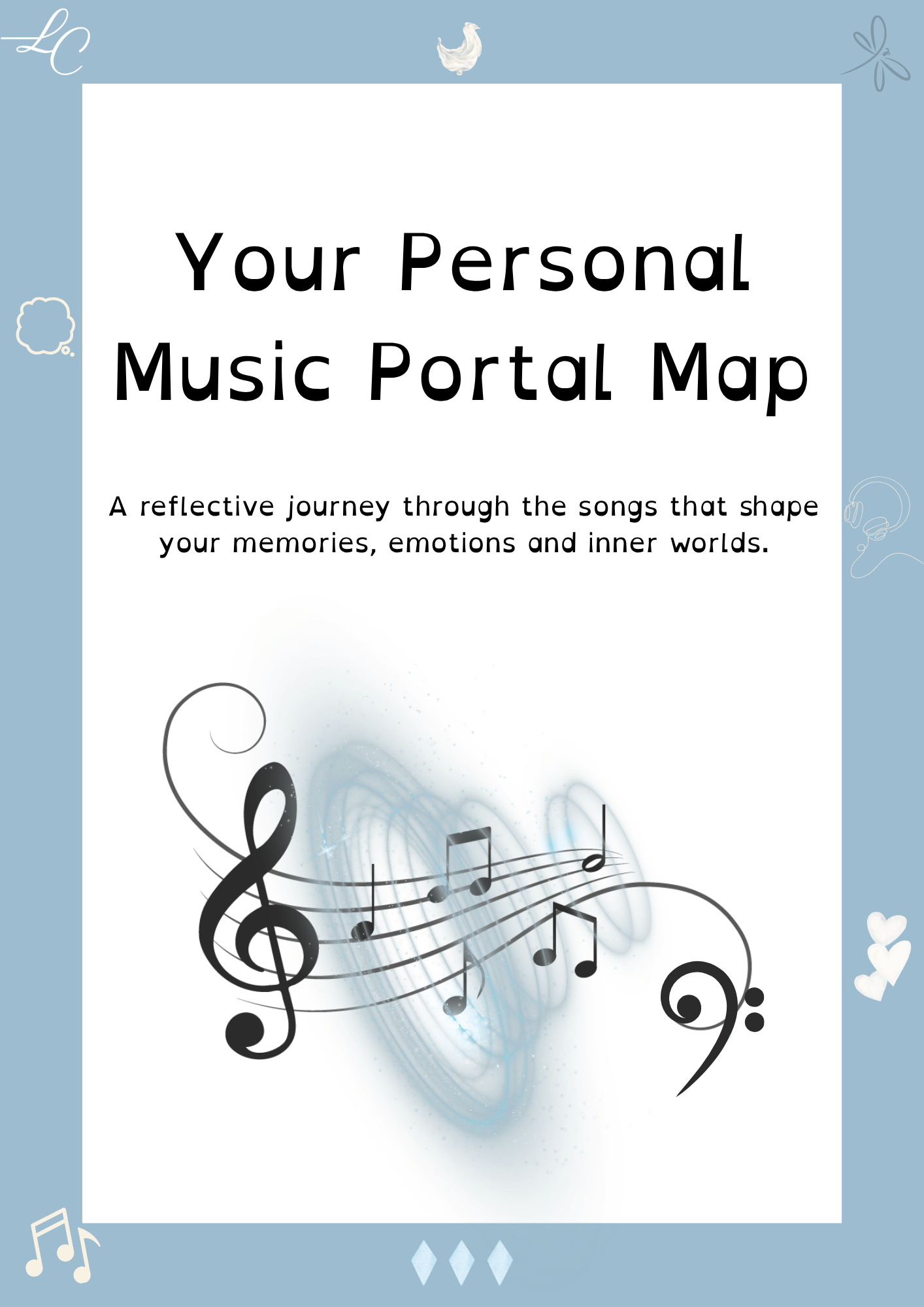
To explore this further, you can download the Your Personal Music Portal Map reflection guide.

Your Personal Music Portal Map


Get Access Now

Where Does Your Music Take You?

There is no single way to experience music.

A song may be a memory, place, feeling, story, a doorway into imagination.

Perhaps the next time a familiar song begins, you might pause and notice:

Where is this music taking me?

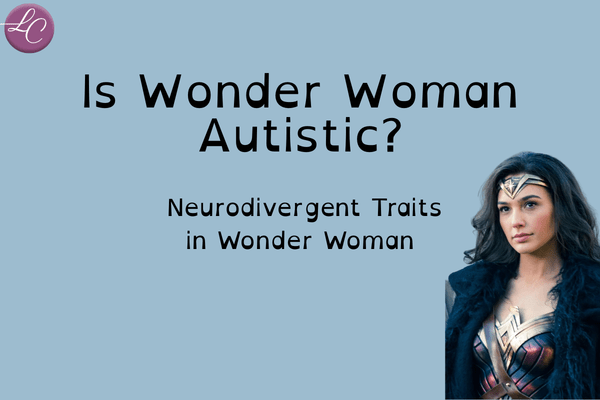
Is Wonder Woman Autistic?

Is Wonder Woman Autistic?

Is Wonder Woman Autistic? 

Neurodivergent Traits in Wonder Woman

Some fictional characters stay with us long after the credits roll.

Not just because they are powerful or heroic, but because something about them feels strangely familiar.

For many neurodivergent viewers, Diana in the 2017 Wonder Woman film carries that feeling.

Her –

  • Perspective
  • Intensity
  • Unwavering moral clarity.

None of these traits are labelled in the story.

Yet many autistic and neurodivergent adults recognise something of themselves in the way she moves through the world.

This raises an interesting question.

Not as a diagnosis, but as a lens.

Could Wonder Woman be read as autistic-coded?

Watch the Video

What Does “Autistic-Coded” Mean?

When people describe a character as autistic-coded, they are not claiming the character is clinically autistic.

Instead, they are noticing patterns of behaviour, thinking, or emotional response that closely resemble autistic traits.

Sometimes writers create these traits intentionally.

Other times they emerge naturally when a character is written as an outsider, a truth-teller, or someone who sees systems differently.

Over time, audiences begin to recognise the resonance.

For many autistic viewers, this recognition can feel powerful.

Not because the character is identical to them.

But because parts of their experience are finally visible.

The Power of the Outsider Perspective

One of the most striking things about Diana is that she enters human society as an observer.

Diana was not raised inside its social expectations.
She has not absorbed its compromises.
And has not learned which truths people prefer to ignore.

As a result, she constantly asks questions that others have stopped asking.

❓ Why tolerate injustice?
❔ Why follow rules that cause harm?
⁉️ Why accept systems that perpetuate suffering?

Many autistic adults describe a similar lifelong experience.

Watching social systems from the outside and noticing patterns that others seem strangely comfortable with.

The outsider perspective can feel isolating.

But it can also reveal truths that insiders overlook.

Moral Clarity and the Refusal to Normalise Harm

Diana’s moral clarity is one of her defining traits.

She does not easily drift into the grey areas that others accept.

When she sees suffering, she does not rationalise it.
She does not look away when she sees injustice.

Some people interpret this kind of thinking as rigidity.

But many autistic adults experience it differently.

Not as inflexibility.

But as integrity.

A strong internal sense of right and wrong that does not easily adjust itself simply because social norms demand it.

Intensity, Focus, and Purpose

Another quality that stands out in Diana is the depth of her commitment once she believes she understands the problem.

Her focus narrows.

She pursues the goal with remarkable persistence.

In storytelling, this reads as heroic determination.

But for many autistic viewers, it also echoes something familiar.

The ability to concentrate deeply on a meaningful objective.

The feeling of purpose that can arise when a problem feels both urgent and solvable.

In everyday life, that intensity can sometimes be misunderstood.

In stories, it becomes a superpower.

Empathy That Moves Toward Action

A persistent myth about autism is that autistic people lack empathy.

Yet many autistic individuals describe something quite different.

Their empathy can be intense, immediate, and physically felt.

Diana reflects this beautifully.

When she encounters suffering, she does not remain distant from it.

She moves toward it, protects those who are vulnerable, and intervenes when systems fail.

Her empathy is not abstract.

It is active.

The Symbolism of No Man’s Land

The scene where Diana crosses No Man’s Land is one of the most powerful moments in the film.

Everyone around her insists the battlefield cannot be crossed.

It is too dangerous.
Too exposed.
Impossible/impassable.

But Diana questions the premise.

And when she realises that the accepted limit is simply a rule others have learned to obey, she moves forward.

For many neurodivergent viewers, this moment carries a deeper symbolic meaning.

The realisation that the systems we tried to fit ourselves into were never designed with us in mind.

And that sometimes the most powerful step is to stop waiting for permission.

Why Characters Like This Matter

Representation does not always arrive through explicit labels.

Sometimes it appears through resonance.

A character who –

  • Questions the rules
  • Who feels deeply
  • And who refuses to abandon their sense of justice.

When those traits are framed as strengths rather than problems, something shifts for the viewer.

Difference begins to look less like a flaw.

And more like a form of power.

A Reflection for You

Sometimes the characters who stay with us are the ones in which we recognise something in them (and us) and before we have words for it.

You might like to pause for a moment and reflect:

  • Which fictional characters have always resonated with you?
  • What traits or behaviours made them feel familiar?
  • Were they outsiders, truth-seekers, protectors, or system-questioners?
  • Did they show strengths that others misunderstood?

Stories can help us see ourselves from a new perspective.

And sometimes the characters we admire most are quietly reflecting qualities we already carry.

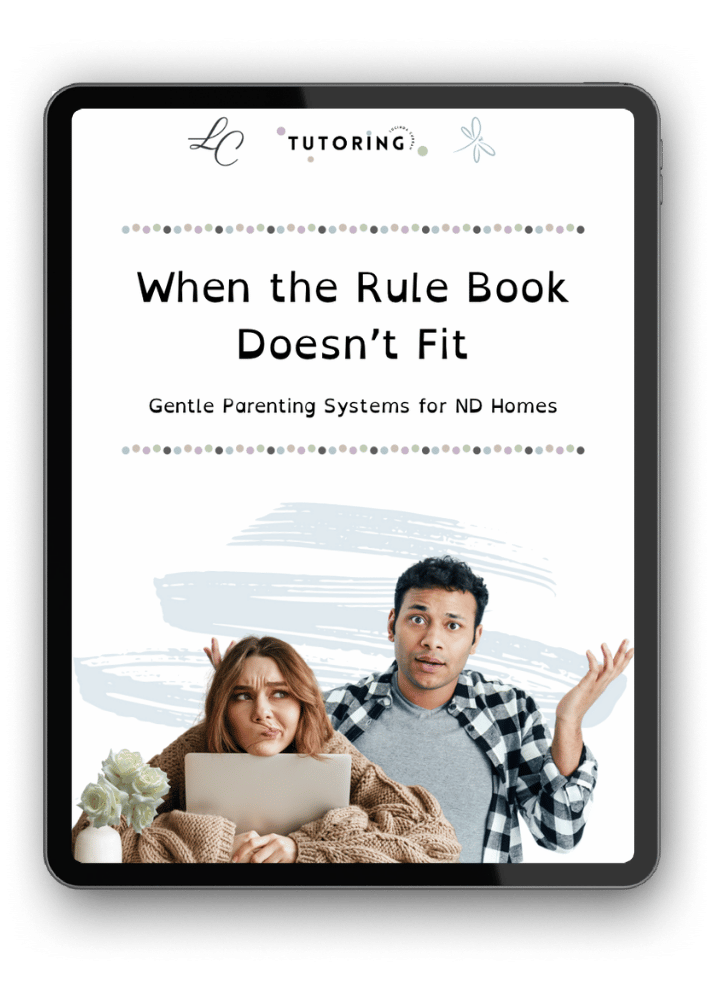
When the Rule Book Doesn’t Fit - Gentle Parenting Systems for ND Homes - mockup

For many neurodivergent adults, there comes a moment of recognition.

You begin to notice that your mind works differently.
Your nervous system responds differently.
And the expectations you were given were never designed with you in mind.

If this reflection resonates, I created something inspired by that moment — When the Rule Book Doesn’t Fit.

It’s for neurodivergent adults and reflective parents who are ready to question inherited templates and begin building regulation-informed ways of living that actually honour how their brains and bodies function.

Creative Parenting for Neurodivergent Children – Part 2

Creative Parenting for Neurodivergent Children – Part 2

Creative Parenting for Neurodivergent Children

The Nurturing Practices That Shape a Life

When people talk about parenting, they often focus on outcomes.

Resilience.
Independence.
Confidence.

What rarely gets talked about is the felt sense a child carries into adulthood — the quiet, embodied knowing of whether they were safe to exist as themselves.

When I reflect on creative parenting for neurodivergent children, I don’t first think about strategies.

I think about atmosphere.

The nurturing practices my Mum offered weren’t grand or performative. They lived in the ordinary spaces: bedtime, play, food, conversation. And yet, they shaped everything.

Because what she gave us was not performance.

It was safety.

Stories as Regulation

Some nights, Mum read to us.
Some nights, she couldn’t.

She was a single parent, exhausted long before exhaustion had language. But even when she didn’t have the energy to read, she lay beside us and told stories instead. Familiar ones. Tweaked ones. Magical ones that felt half-alive in the dark.

Looking back as a neurodivergent adult, I see what those stories really were.

They were regulation.

Softening the edges of the day.
Creating continuity.
Offering predictability wrapped in imagination.

For neurodivergent children, stories can act as a bridge — between stimulation and rest, between chaos and coherence.

When I think about creative parenting for neurodivergent children, I think about that bridge.

Play as a World-Building Tool

We grew up with very little money, but we never felt deprived.

A cardboard box became a stagecoach.
A footstool became a driver’s seat.
Hobby horses carried us into entire worlds.

What mattered wasn’t the object. It was the permission.

Permission to —

  • Imagine fully
  • Immerse
  • Take play seriously.

As an adult, I understand something I couldn’t name then:

Imagination is not escapism for neurodivergent children.

Imagination is processing.
Integration.
It is nervous system recalibration through story and movement.

Creative parenting for neurodivergent children honours this instead of dismissing it.

Meeting Sensory Needs with Creativity

Food was complicated.

Textures lingered.
Smells overwhelmed.
Certain after-feels stayed far too long.

Instead of forcing compliance, Mum invited curiosity.

Enter: Spiderman’s favourite foods.

One day a letter arrived. A list was revealed. Suddenly, the question shifted from
“Why won’t you eat this?”
to
“What would Spiderman choose?”

Play replaced pressure.
Identity replaced shame.

When a neurodivergent child feels respected instead of corrected, the nervous system loosens its grip.

That shift is not small.

It is foundational.

Trust as the Ultimate Gift

As we grew older, Mum didn’t tighten control.

She loosened it.

Decisions were talked through. Risks were named. But the final choice was ours. And when things didn’t work out, she didn’t weaponise hindsight.

She stayed.

As a neurodivergent adult reflecting back, this might be the practice that shaped me most.

Trust teaches responsibility without fear.
Autonomy without abandonment.
Exploration without exile.

Creative parenting for neurodivergent children is not about removing structure.

It is about embedding structure inside relationship.

Video: Creative Parenting for Neurodivergent Children – Part 2

In Part 2 of this series, I explore these themes more deeply — and what happens when traditional parenting frameworks simply do not fit the nervous system of the child in front of you.

A Closing Reflection

What stays with me is not any single strategy.

It is the orientation underneath it all.

We were —

  • Seen
  • Trusted
  • Allowed to become.

As an adult, that early sense of safety still lives in my nervous system.

Creative parenting for neurodivergent children does not guarantee ease.

But it does shape identity.

It shapes whether a child grows up believing they are a problem to be solved —
or a person to be understood.

That difference lasts a lifetime.

When the Rule Book Doesn’t Fit

For many neurodivergent adults, there comes a moment of reckoning:

You realise the rule book you were handed was never written with you in mind.

If this reflection resonates, I’ve created something inspired by this very truth – When the Rule Book Doesn’t Fit

It’s for neurodivergent adults and reflective parents who are ready to question inherited templates and create regulation-informed ways of living instead.

Get Your FREE Copy Here

You Might Also Be Interested In

Creative Parenting for Neurospicy Kids: The Clever Systems My Mum Used (Part 1)
A reflection on the gentle systems that quietly reduced conflict and built safety.

Creative Parenting for Neurodivergent Learners: When the Rule Book Doesn’t Fit (Part 2)
A learning-focused perspective on regulation before compliance.

Daydreaming or in Shutdown? How to Support Neurodivergent Kids (and Yourself)
Pick the differences between daydreaming and shut down – it matters!

Forever in my heart

Creative Parenting for Neurodivergent Children – Part 1

Creative Parenting for Neurodivergent Children – Part 1

Creative Parenting for Neurodivergent Children

The Quiet Power of Gentle Systems

When people talk about parenting neurodivergent children, the conversation often swings between two extremes — rigid control or complete chaos.

What rarely gets named is the third way — creative structure.

Not imposed.

Not authoritarian.

But quietly intelligent systems that reduce friction in everyday life and allow sensitive nervous systems to settle.

I didn’t grow up with parenting manuals or behaviour charts.

What I grew up with were small, imaginative systems my Mum invented because the usual approaches didn’t work for us.

At the time, they simply felt like how our household functioned.

Looking back now, I can see how deeply regulating they were.

They didn’t try to change who we were. They changed the environment around us.

When the World Is Too Loud, Systems Become Safety

As neurodivergent children, my brother and I bickered a lot.

Not because we were defiant or difficult — but because everything felt amplified.

Fairness mattered intensely. Predictability mattered even more.

Small decisions carried emotional weight far beyond what adults often expect.

Rather than intervening emotionally every time, Mum stepped sideways and created systems that removed the heat altogether.

Calendar days were one of those systems.

Odd days were mine. Even days were his.

On your day, you chose. On the other day, you waited.

What this quietly dissolved was the endless negotiation that drains nervous systems dry.

There was no argument to win, no injustice to correct in the moment. Tomorrow already existed. That single fact did something profound: it let the body stand down.

For neurodivergent children, knowing when your turn is can be more regulating than getting your way.

Predictability Without Punishment

Another system sat on the fridge: a simple list of expectations and consequences.

Pocket money wasn’t automatic. It was earned.

And if you crossed a clearly defined boundary, there was a clearly defined outcome.

There were no – 

  • Lectures,
  • Raised voices, or
  • Emotional withdrawal.

What this taught us wasn’t fear — it was orientation

We knew where we stood. 

The ground didn’t shift beneath us depending on Mum’s mood or exhaustion level. 

That kind of consistency builds trust in the world itself.

For a sensitive nervous system, unpredictability is often more distressing than consequence.

Humour as Regulation

Some of Mum’s systems were quietly practical.

Others were playful.

The “Ejector Seat” in the car was pure theatre.

There was no actual button, of course — but as children, the possibility was enough.

What mattered wasn’t the threat, but the tone. It was light. Almost conspiratorial.

Boundaries delivered with humour land very differently in the body.

Where fear tightens, play opens.

And open nervous systems regulate faster.

Fairness You Can Feel

“One divides, the other chooses” might be one of the most elegant parenting tools ever invented.

Not because it explains fairness — but because it embodies it.

You learn quickly when fairness lives in your own hands.

There was no moralising. Just lived experience.

These Systems Were Never About Control

None of these approaches were designed to make us compliant.

They were designed to make daily life workable for children with big emotions, strong justice sensitivity, and nervous systems that reacted quickly to stress.

They created:

  • Fewer emotional spikes
  • Less sensory overload
  • More internal stability
  • A sense that the world was coherent, not arbitrary

That matters more than we often realise.

Watch the Video: Creative Parenting for Neurodivergent Children – Part 1

In this video, I share some of the amazing strategies that my own mother created to navigate life with her neurodivergent kids! (Part 2 will be out soon – stay tuned.)

A Closing Reflection

If you’re an adult reflecting on your own childhood, you may recognise this feeling — that some unseen intelligence held things together for you.

And if you’re parenting now, perhaps you’re already inventing your own quiet systems without naming them as such.

You don’t need to replicate anyone else’s approach.

You only need to listen closely to what your own and your child’s nervous system is asking for.

Gentle structure can be a form of love.

Exploring Further…

If you’re carrying a sensitive nervous system — whether shaped in childhood or through ongoing caregiving — my work is designed to meet you gently where you are. Read more here.